

35 SMITH & WESSON AUTO
| Calibre | 35 |
| In the cabinet | IMPERIAL HANDGUN .35" UP TO .399" · 8 images |

Research notes
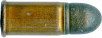
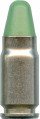
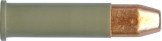
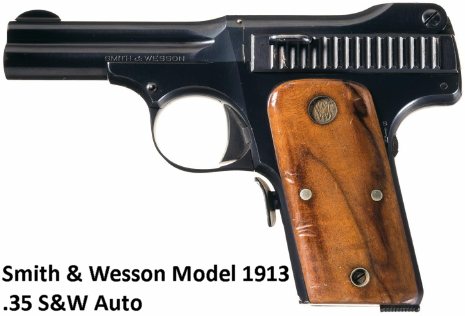
During the early years of the 1900’s every major gunmaker in America, except for Smith & Wesson were manufacturing and selling quantities of pocket pistols in .25, .32 and.380 caliber. S&W was at the forefront of pocket revolvers but did not have anything to compete otherwise. After some research they settled on purchasing the patents for a blowback-operated pistol from Belgian designer, Charles Philibert Clement. He had at that stage a small and relatively under-powered 5mm cartridge design for his pistol. S&W used a modified version of Clement’s original 1907 design to launch the Model 1909 in .25 and .32 ACP. This 1909 design served as the basis for the new pocket pistol S&W offerings. With the patent transfers done by 1910, they worked on redesigning and developing the new pocket pistol and launched their Model 1913 in an entirely new cartridge, namely the .35 S&W Auto. The bullet diameter was 7.65mm or .320 inch as opposed to .312 inch for the 32 Auto. S&W chose therefore to call this new design the .35 Caliber Automatic to not create confusion, although people soon figured out the .32 ACP ammo functioned without problems in the .35 S&W. Ballistically the .35 S&W was inferior to the 32 ACP, and sales were not what they expected. Given the interruptions during the War years to manufacture revolvers firstly for the British during 1915 and the US Military during 1918, the Model 1913 was more expensive that the 32 ACP as well as competitors and the 35 S&W was discontinued in 1922. (Erlmeier, Brandt Ref. 342).