


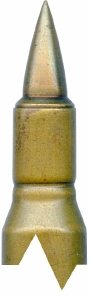
30/24 US T1 XPL GERLICH
| In the cabinet | IMPERIAL MILITARY .30" UP TO .399" · 3 images |

Research notes
Frankford Arsenal conducted tests at Aberdeen Proving ground in 1932 with Gerlich rifles and ammunition. These were tapered-bore rifles and the bullets had flanges or “skirts” that provided a larger initial surface area to provide a more effective seal in order to increase the velocity of the bullet. As a result of the Gerlich report by Frankford Arsenal, a decision was taken in January 1933 for a development based on the Cal. .30 service Case (30-06) with a bullet with a final diameter of .24 inch. From a design study it was called CARTRIDGE, HIGH VELOCITY CAL. .30-.24 T1. The bullet was made of monel metal with a flat base and two flanges. Extensive tests were done with bullets also made of various metals including brass, copper, gilding metal, beryllium copper and various types of monel metal. Velocities obtained during testing ranged from 3,500 fps up to 4,800 fps, below expectations and what was claimed by Gerlich. By the end of 1934 it was decided that the project would be cancelled as there was not enough justification to continue with a project with complex barrels and bullets without clear evidence of obtaining any superior performance than what was already obtained.



