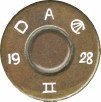
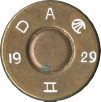
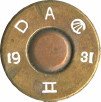
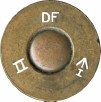
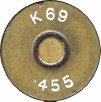
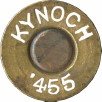
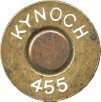
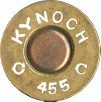









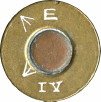
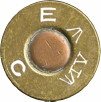
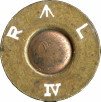
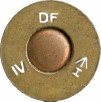
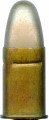
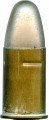
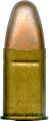
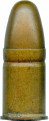


455 WEBLEY Mk.II - VI
| Calibre | 455 |
| In the cabinet | IMPERIAL HANDGUN .45" UP TO .499" · 105 images |
Research notes
455 WEBLEY Mk.II
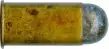
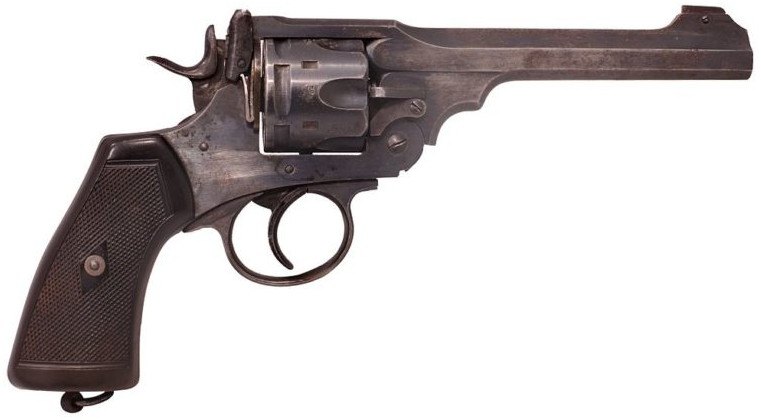
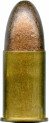
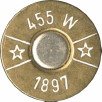
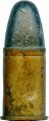
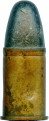
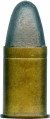
The Mark 2 was approved in July 1897 as “CARTRIDGE SA BALL PISTOL WEBLEY CORDITE MARK II (ALSO ENFIELD)” Problems occurred with the Mark 1 with misfires and pierced primers that were initially attributed to the cartridge but was later found to be the heavier hammer in the new Mark 2 revolver that was adopted in 1894. Cordite was invented in 1889 and it was found that ballistics could be improved with a shorter case because of the cordite loads. As can be seen below with the developments of the Mark 3 – 5, on every occasion the Mark 2 was still utilised and remained in service until 1939 when it was replaced by the Mark 6. The different developments below show however that from the very start, it was considered unsuitable but despite various attempts, it stuck around until the 455 Webley was finally declared obsolete in 1946. (Erlmeier, Brandt Ref. 461)
Last specimen resembles a Mark IV, but is a later Mk. II load with the convex top.
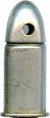
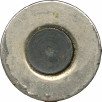
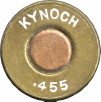
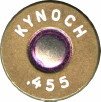
First specimen is a snap cap by Parker Hale and the second specimen is a commemorative round for the 1897 adoption of the 455 Webley Mk. II by Megret, France
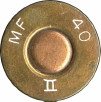
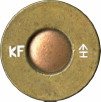
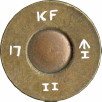
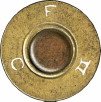
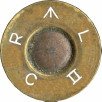
MF = Small Arms Ammunition Factory N°1, Footscray Australia
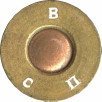
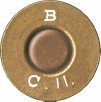
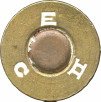
Dominion Arsenal, Canada
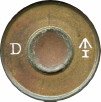
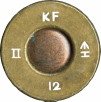
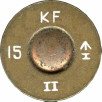
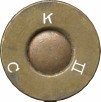
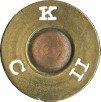
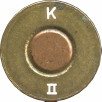
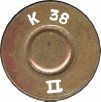
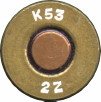
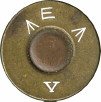
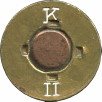
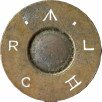
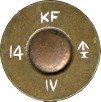
First 2 specimens by Dum Dum Arsenal and the rest by Kirkee Arsenal, India
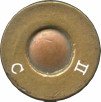
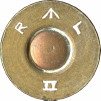
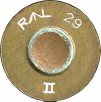
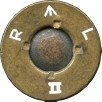
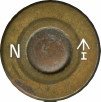
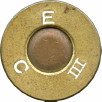
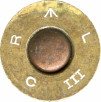
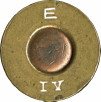
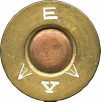
The N ᗑ headstamp is from India, with N being NORTHERN CIRCUIT. Royal Laboratory Woolwhich (ᗑ is a Government contract mark)
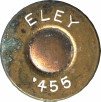
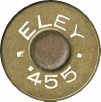
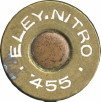
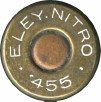
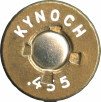
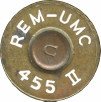
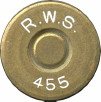
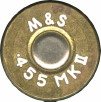
Later commercial variations: Fiocchi Italy, Mountain & Sowden, England, REM-UMC, RWS, Squires Bingham, Wilkinson Sword Company (manufactured by RWS)
455 WEBLEY Mk.III
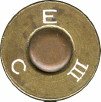
The Mark 3 was approved in February 1898 as “CARTRIDGE SA BALL PISTOL WEBLEY CORDITE MARK III (ALSO ENFIELD)”. This followed from trials conducted in October 1897, when the first questions were raised about the effectiveness of the Mark 2. During tests the Mark 2 proved to have better penetration but the Webley Patent (Pat. 14,754 of June 1897) man stopping bullet had better stopping powder in tests with sheep carcasses. The Mark 3 was withdrawn from service in 1900 due to the fact that it contravened the terms of the St Petersburg Declaration as well as The Hague Convention. Instruction was given that remaining stock be used in practice and the Mark 3 was declared obsolete in 1902. (Erlmeier, Brandt Ref. 462)
455 WEBLEY Mk.IV
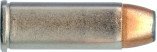
The Mark 4 was approved in May 1912 as “CARTRIDGE SA BALL PISTOL WEBLEY MARK IV”. With the concerns about the legality of the Mark 3 bullet and its subsequent withdrawal, the Mark 2 was re-introduced and with that came the same doubts about the effectiveness of the Mark 2. The Royal Navy started experimenting with a bullet designed by Eley and it was used successfully by them at the 1905 Bisley meeting. On examination by the Chief Superintendent of Ordnance Factories it was noted that the bullet is similar to an existing Woolwich design, namely RL 10833. This led to the adoption of the Mark 4 but soon after approval, fears were raised about the design and that it would cause the same problems as the Mark 3. It was withdrawn from service in 1914. As can be seen below, specimens are encountered with a rounded/convex top. These are target reloads and not Mark 4 loadings. The true Mark 4 loads had a true ‘wad cutter’ bullet with a flat top. (Erlmeier, Brandt Ref. 463)
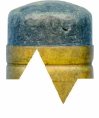
Mark. IV bullet on the left compared to a later wad cutter loading.
Last two specimens are Dum Dum and Kirkee Arsenal, India
455 WEBLEY Mk.V
The Mark 5 was approved in April 1914 as “CARTRIDGE SA BALL PISTOL WEBLEY MARK V”. The design of the Mark 5 was the same as for the Mark 4, except for the bullet which consisted of 12 parts lead and 1 part antimony alloy, instead of 12 parts lead and 1 part tin. Because of the issues regarding the Mark 4 bullet not being legal in terms of the St Petersburg Declaration and The Hague Convention, the lifespan of the Mark 5 was even shorter than that of the Mark 4 and it was believed that it was used solely for target practice. The only cartridges encountered are Mark 5 cases that were reloaded/converted to other versions like the Mark 2, as can be seen below. Actual Mark 5 cartridges are very rare. (Erlmeier, Brandt Ref. 464)
First specimen is an original Mk. V load (first headstamp below), the second is a Mk. V case that was converted to Mk. II load.
455 WEBLEY Mk.VI
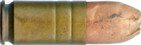
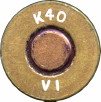
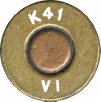
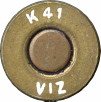
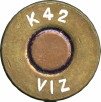
In the beginning of the 1920’s the British were looking for a replacement for the 455 Webley and by the early 1930’s the 380 Enfield was adopted, but the 455 remained in service until the end of WW2. The Mark 6 was the final version adopted by the British and was accepted as “CARTRIDGE SA BALL REVOLVER .455 inch MARK VI (approved September 1939) AND VIz” (approved April 1941). The bullet was the same shape as for the Mark 2 loading but had a GM or CN jacket as lead bullets were seen as ‘unsportsmanlike behaviour’. The 455 Mk. 6 was declared obsolete in 1946 but was manufactured up to the 1960’s on foreign contracts (notably Pakistan). (Erlmeier, Brandt Ref. 465)
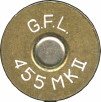
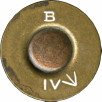
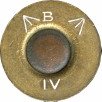
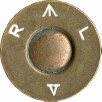
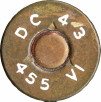
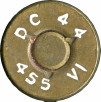
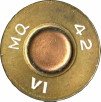
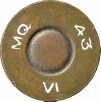
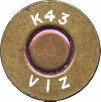
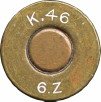
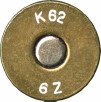
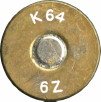
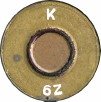
First two headstamps are by Dominion Cartridge Company, Canada, the next two are by Government Ammunition Factory No. 5, Rocklea, Australia.
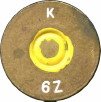
The Mk. VI Z was approved in 1941 so it can be seen that there was an overlap in the headstamp from Mk. VI to Mk. VIZ. Yellow p/a is a reference load.
BLANK, PROOF AND DRILL VERSIONS
BLANK
The Mark 1 blank was issued in a relatively small quantity (277,460 rounds) between 1897-1899 and it was believed that because of safety requirements the Mark 1 was changed to the Mark 2 that was approved in March 1899 as the “CARTRIDGE SA BLANK PISTOL WEBLEY MARK II (ALSO ENFIELD)”
Another blank issued was the “CARTRIDGE SA BLANK REVOLVER .455 INCH MARK II (INDIA PATTERN)”.
DRILL
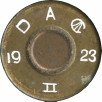
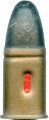
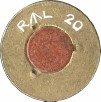
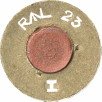
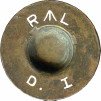
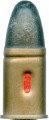
With hostilities breaking out in 1914 there was a real need to train a large number of men relatively quickly in the use of the service revolver and by the end of WW1 a drill round was approved as “CARTRIDGE SA DUMMY REVOLVER .455 INCH MARK I” in June 1920. Cases were of white metal with 3 red indented flutes with the primer being a red, fibrous material to absorb the hammer blow. As can be seen below, brass cased versions also existed. With the title change in 1922 to “CARTRIDGE SA DRILL REVOLVER .455 INCH MARK I” and the Mark number was added to the headstamp as can be seen below. In 1927 the designation was changed again to “CARTRIDGE SA DRILL REVOLVER .455 INCH D MARK I” and subsequent production included the letter D on the headstamp.