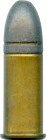
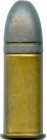
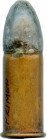

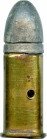


44 SMITH & WESSON AMERICAN
| Calibre | 44 |
| In the cabinet | IMPERIAL HANDGUN .40" UP TO .449" · 20 images |

Research notes
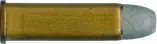
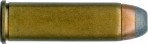
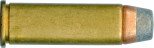
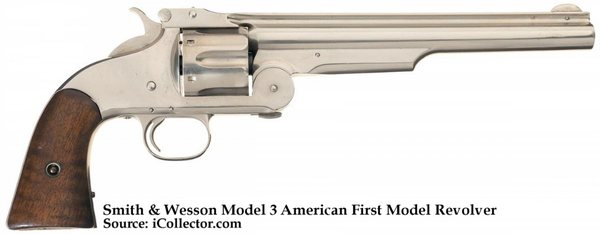
Before the start of the Civil War, Smith & Wesson still held the Rollin White patent for the bored through cylinder revolver, which was essential in the development of the new self-contained metallic cartridge. They developed the top-hinged Mod. 1 revolver, chambered for the diminutive .22 Rimfire. After the start of the Civil War, S&W introduced the Mod. 2 (Model 2 Army) chambered for the slightly more powerful 32 Rimfire cartridge. After the end of the Civil War, most revolvers were still cap-and-ball designs, which prompted S&W to launch the Mod. 3 revolver in 1870 in 44 Henry Rimfire. The design differed from the top hinged model in that it was a top break design with the barrel tipping down instead of up and was called the Model 3 American. It was the submitted to the Army Ordnance Board for trials. In order to improve reliability the Ordnance Board recommended a center-fire design and this lead S&W to develop the 44 American which started out as an outside lubricated bullet. From this design, Major George Schofield improved it and this resulted in the adoption of the improved Model 3 in 45 S&W Schofield in 1875. (Erlmeier, Brandt Ref. 413)
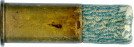
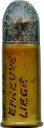
Last specimen is the Epreuve Liege proof loading